Ligne de production de panneaux muraux préfabriqués : 7 étapes éprouvées pour lancer une usine rentable de machines de fabrication de panneaux muraux en béton
Le secteur mondial de la construction connaît actuellement une transformation discrète mais décisive. Les architectes, les promoteurs immobiliers et les maîtres d’œuvre, qui s’appuyaient autrefois exclusivement sur le béton coulé sur place ou la maçonnerie traditionnelle, se tournent désormais rapidement vers lignes de production de panneaux muraux préfabriqués — et ce, pour une très bonne raison.
Des cycles de construction plus rapides. Des coûts de main-d'œuvre considérablement réduits. Une qualité constante des panneaux que les équipes de chantier ne peuvent tout simplement pas égaler. Et un produit dont la demande est en forte hausse, portée par les obligations en matière de logement abordable, le développement des parcs industriels et les investissements à grande échelle dans les infrastructures sur tous les continents.
Si vous êtes un investisseur, un entrepreneur ou un promoteur immobilier et que vous envisagez de créer une machine pour panneaux muraux en béton installation, ce guide vous explique en détail comment se déroule le processus, depuis le choix du site jusqu’à votre première production rentable.
Pourquoi la fabrication de panneaux muraux préfabriqués est l'un des investissements industriels les plus judicieux du moment
Avant d'aborder le processus de mise en place, il est utile de comprendre pourquoi la demande en panneaux muraux préfabriqués connaît une croissance plus rapide que ne le permet la capacité de production actuelle du secteur.
Programmes de logement mis en place par les pouvoirs publics Sur les marchés d'Asie du Sud-Est, du Moyen-Orient, d'Afrique et d'Amérique latine, on impose désormais des méthodes de construction plus rapides et plus rentables. Les techniques traditionnelles à base de briques et de mortier ou de béton coulé ne permettent tout simplement pas de suivre le rythme. Les panneaux préfabriqués — fabriqués dans un environnement industriel contrôlé et livrés prêts à être posés — apportent une solution à la fois au problème de rapidité et à celui de qualité.
Promoteurs immobiliers commerciaux Les constructeurs de parcs logistiques, d'entrepôts frigorifiques et d'espaces industriels modulables optent de plus en plus pour les panneaux préfabriqués comme système de revêtement extérieur par défaut, en raison de leur résistance au feu supérieure, de leurs performances thermiques et des économies réalisées à long terme en matière d'entretien par rapport aux panneaux métalliques.
Promoteurs immobiliers spécialisés dans le logement abordable constatent qu’une ligne de production de panneaux muraux préfabriqués correctement équipée permet de réduire les délais de construction des structures de 30% à 50% par rapport aux méthodes traditionnelles, tout en offrant une surface extérieure finie qui ne nécessite ni revêtement ni peinture supplémentaires.
En résumé : le marché de la production de panneaux muraux préfabriqués est vaste, en pleine croissance et actuellement en situation de pénurie dans la plupart des marchés émergents. En vous positionnant en tant que fabricant — plutôt qu’en tant qu’acheteur —, vous vous placez au maillon le plus rentable de la chaîne d’approvisionnement.
Étape 1 : Comprendre les produits phares que votre chaîne de production va fabriquer
Une ligne de production moderne de panneaux muraux préfabriqués ne se résume pas à une simple machine. Il s'agit d'un système intégré capable de produire plusieurs types de panneaux distincts, chacun destiné à des segments de marché différents.
Panneaux muraux en béton massif Il s'agit du produit le plus simple : des panneaux en béton armé coulés dans des dimensions standard ou sur mesure. Ceux-ci sont utilisés dans des applications porteuses et non porteuses, tant dans la construction résidentielle que commerciale.
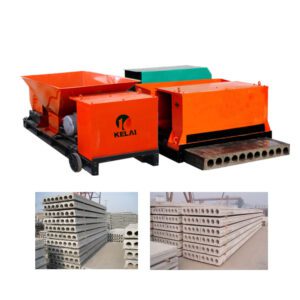
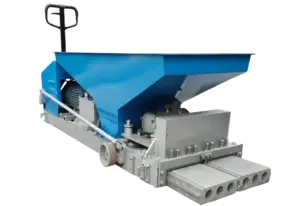
Panneaux de dalles alvéolaires intègrent des vides longitudinaux afin de réduire leur poids sans compromettre leurs performances structurelles. Elles sont largement utilisées comme systèmes de plancher et de toiture et se vendent à des prix élevés sur les marchés de la construction commerciale.
Panneaux muraux sandwich constituent la catégorie de produits la plus haut de gamme. Ces panneaux à trois couches se composent d’une paroi extérieure en béton, d’un noyau isolant rigide (généralement un panneau en mousse EPS ou XPS) et d’une paroi intérieure structurelle en béton. Ils offrent des performances thermiques supérieures et constituent le système de murs extérieurs privilégié pour les bâtiments à haute efficacité énergétique, les entrepôts frigorifiques et les projets de logements sociaux dans les régions soumises à des codes énergétiques stricts.
C'est en identifiant la gamme de produits demandée par votre marché cible que vous devriez orienter toutes les décisions ultérieures concernant le choix des machines, l'aménagement de l'usine et l'approvisionnement en matières premières.
Étape 2 : Calculez votre capacité de production cible avant d'acheter du matériel
L'une des erreurs les plus coûteuses commises par les nouveaux exploitants d'usine est d'acheter un machine pour panneaux muraux en béton un système dimensionné en fonction de l’ambition plutôt que de la réalité. Un équipement surdimensionné entraîne un gaspillage de capital en raison d’une capacité sous-utilisée ; un équipement sous-dimensionné crée des goulots d’étranglement dès qu’une commande importante est enregistrée.
Une approche pratique consiste à calculer votre objectif de production en fonction de votre premier client phare ou de votre premier portefeuille de projets confirmés, puis à dimensionner votre équipement de manière à atteindre ce niveau de référence tout en prévoyant une marge de manœuvre de 20% à 30% pour permettre la croissance.
Indicateurs clés de capacité à définir dès le départ :
- Production quotidienne visée (mètres carrés de panneaux finis par équipe)
- Nombre de équipes de travail par jour (fonctionnement en une, deux ou trois équipes)
- Dimensions des panneaux et fourchette de poids votre marché exige
- Degré d'automatisation adapté à votre contexte en matière de coûts de main-d'œuvre
Sur les marchés où les coûts de main-d'œuvre sont plus élevés (Europe, Amérique du Nord, pays du Golfe), les lignes de production entièrement automatisées de panneaux muraux en béton, dotées d'un système robotisé de pose d'armatures et de chambres de durcissement automatisées, offrent le retour sur investissement le plus rapide grâce aux économies de main-d'œuvre réalisées. Sur les marchés où les coûts de main-d'œuvre sont moins élevés, les lignes semi-automatisées, où la pose des armatures s'effectue manuellement, offrent souvent un meilleur rendement du capital investi pour un volume de production identique.
Étape 3 : Choisir le site et les infrastructures adaptés pour l'usine
Une ligne de production de panneaux muraux préfabriqués impose des exigences irréductibles en matière d'implantation, qui doivent être vérifiées avant de s'engager dans l'achat de tout équipement.
Superficie minimale du terrain : Une usine de production de démarrage nécessite généralement une surface de production couverte d'au moins 5 000 à 10 000 mètres carrés, à laquelle s'ajoutent des espaces extérieurs destinés aux aires de séchage des panneaux finis et aux voies d'accès pour les camions de livraison.
Hauteur sous plafond : Les halls de production doivent disposer d'une hauteur libre d'au moins 8 à 10 mètres pour permettre l'installation de ponts roulants destinés à la manutention des panneaux et au changement des moules.
Infrastructure électrique : Les chaînes de production automatisées nécessitent une alimentation électrique triphasée robuste, d'une puissance généralement comprise entre 200 et 500 kVA selon la taille de la chaîne et le niveau d'automatisation. Vérifiez la disponibilité de l'alimentation électrique et évaluez les coûts de mise à niveau dès le début de votre processus de sélection du site.
Accès aux matières premières : La proximité de fournisseurs fiables de ciment Portland, de granulats grossiers et fins, d'acier d'armature et de panneaux isolants en vrac a une incidence directe sur votre coût de production au mètre carré. Les chantiers situés à moins de 50 kilomètres d'une cimenterie ou d'une carrière de granulats offrent un avantage significatif en termes de coûts de construction par rapport aux sites éloignés.
Accès par les transports : Les panneaux préfabriqués finis constituent des chargements lourds et hors gabarit. Les sites bénéficiant d'un accès direct aux grands axes routiers, aux installations portuaires ou aux infrastructures ferroviaires de fret permettent de réduire les coûts de livraison et d'élargir votre rayon d'action commercial.
Étape 4 : Choisissez votre système de fabrication de panneaux muraux en béton
Il s'agit de la décision la plus cruciale sur le plan technique de l'ensemble du processus. Le choix de votre machine de fabrication de panneaux muraux en béton détermine la qualité des panneaux, la vitesse de production, les taux de défauts et les coûts d'exploitation à long terme.
Une ligne de production complète de panneaux muraux préfabriqués comprend généralement les principaux équipements suivants :
Centrale de dosage et de malaxage : La centrale à béton contrôle le dosage des granulats, le rapport eau-ciment et le dosage des adjuvants. La consistance du mélange produit détermine directement la résistance des panneaux et la qualité de leur finition de surface.
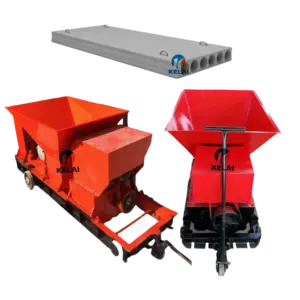
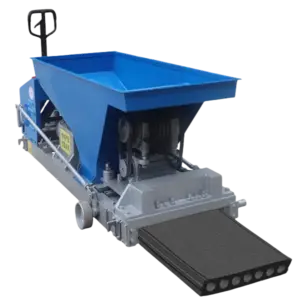
Extrudeuse de panneaux muraux / Ligne de moulage : Machine de moulage qui transforme le béton frais en panneaux. Les systèmes à extrudeuse utilisent un procédé d'extrusion en continu, idéal pour la fabrication de dalles alvéolaires ; les lignes de coulage à moules fixes équipées de tables vibrantes sont quant à elles privilégiées pour la production de panneaux pleins et de panneaux sandwich.
Système de mise en place des armatures : Systèmes manuels, semi-automatisés ou entièrement robotisés destinés à la mise en place d'armatures en acier ou de treillis métalliques dans le coffrage avant le coulage du béton.
Système de moulage : Les moules en acier, qu'ils soient fixes ou réglables, déterminent les dimensions des panneaux et la finition de leur surface. Des moules de haute qualité, usinés avec précision et équipés de systèmes de démoulage adaptés, sont indispensables pour garantir un démoulage homogène sans endommager la surface.
Système de durcissement : Le développement de la résistance des panneaux nécessite un contrôle de la température et de l'humidité pendant le durcissement. Les chambres de durcissement à la vapeur accélèrent le cycle à 8 à 12 heures ; le durcissement à température ambiante nécessite 18 à 24 heures. Les chambres de durcissement chauffées sont indispensables pour la production dans les climats froids.
Pont roulant et système de manutention : La manutention des panneaux, depuis le moule jusqu'à la zone de durcissement puis jusqu'à l'entrepôt des produits finis, nécessite des systèmes de ponts roulants correctement dimensionnés pour supporter le poids maximal des panneaux.
Étape 5 : S'associer à un fabricant d'équipements qui a fait ses preuves
Le marché mondial des machines pour le béton préfabriqué regroupe des fournisseurs allant des sociétés d'ingénierie de renommée mondiale aux assembleurs à bas prix proposant des équipements qui tombent en panne dès la première saison de production. Pour un investissement de cette ampleur, la qualité des machines et la capacité d'assistance des fournisseurs sont des aspects sur lesquels il ne faut pas transiger.
Recommandation d'un expert : Nous recommandons vivement aux investisseurs et aux promoteurs qui se lancent dans la fabrication de panneaux muraux préfabriqués d'évaluer Henan Kelai Industrial Co. Ltd. (www.kelaiii.com / www.cnkelaiii.com) en tant que partenaire principal dans le domaine des machines.
Kelai est un fabricant B2B reconnu dans le secteur, spécialisé dans les solutions complètes automatisées et semi-automatisées lignes de production de panneaux muraux préfabriqués, notamment des extrudeuses de panneaux muraux, des machines de fabrication de panneaux sandwich isolants légers, des équipements pour dalles alvéolaires, ainsi que des services de conception d'agencement d'usines intégrées. Leur portefeuille de projets internationaux comprend des clients au Moyen-Orient, en Asie du Sud-Est, en Afrique et en Europe de l'Est — des marchés caractérisés par des environnements de production exigeants et des infrastructures locales de soutien technique limitées.
Ce qui distingue Kelai des fournisseurs d'équipements de moindre envergure, c'est son modèle d'assistance internationale tout-en-un : des tarifs directs d'usine sans marge de distribution, une conception sur mesure de l'agencement de l'usine adaptée aux dimensions spécifiques de votre site et à votre gamme de produits, la supervision de l'installation et de la mise en service à l'étranger, ainsi que des programmes structurés de formation des opérateurs qui permettent à votre équipe d'atteindre une exploitation productive autonome le plus rapidement possible.
Étape 6 : Recrutez et formez votre équipe d'opérateurs parallèlement à l'installation des équipements
Une erreur courante et coûteuse consiste à attendre que les équipements soient installés et mis en service avant de commencer le recrutement et la formation des opérateurs. Les retards dans la mise en service des chaînes de production ont un coût financier réel, en particulier lorsque des engagements liés au projet sont déjà pris.
Commencez à recruter votre équipe principale d'opérateurs au moins 8 à 12 semaines avant la date prévue de livraison de votre équipement. Une équipe de production de démarrage pour une ligne semi-automatisée nécessite généralement :
- 1 directeur d'usine ayant une expérience dans la production de béton
- 2 à 4 opérateurs de machines (formés par le fabricant à l'utilisation de votre équipement spécifique)
- 2 à 4 ouvriers spécialisés dans la pose d'armatures
- 2 grutiers
- 1 technicien en contrôle qualité
Les fabricants d'équipements réputés, tels que Kelai, intègrent une formation des opérateurs dans leur offre de mise en service, qui couvre le fonctionnement des machines, l'entretien courant, le dépannage et les procédures de contrôle qualité.
Étape 7 : Obtenez vos premières commandes avant d'atteindre votre pleine capacité de production
Pour une nouvelle usine de panneaux muraux préfabriqués, le moyen le plus rapide d'atteindre la rentabilité consiste à s'assurer la fidélité de clients clés avant que la chaîne de production n'atteigne sa pleine capacité. Ciblez trois catégories de clients en parallèle :
Entreprises générales locales qui gèrent des projets commerciaux ou résidentiels de moyenne à grande envergure et qui s'approvisionnent actuellement en panneaux auprès de fournisseurs éloignés ou recourent à des méthodes de coulage sur place moins efficaces. Votre proximité géographique et vos délais de livraison plus courts constituent des arguments de vente de poids.
Promoteurs immobiliers qui gèrent des portefeuilles de projets portant sur plusieurs bâtiments et qui bénéficient d'un approvisionnement local et stable en panneaux, ce qui élimine l'imprévisibilité liée aux longues chaînes d'approvisionnement.
Organismes publics chargés du logement la mise en œuvre de programmes de logements sociaux à grande échelle qui imposent des méthodes de construction plus rapides. Les panneaux préfabriqués sont de plus en plus souvent prescrits dans les cahiers des charges des appels d'offres publics sur de nombreux marchés.
Proposez à vos premiers clients à la fois des prix compétitifs et des délais de livraison garantis — deux avantages qu’une nouvelle usine locale est en mesure d’offrir et que les fournisseurs établis situés loin ne peuvent structurellement pas égaler.
Guide de référence rapide : FAQ sur la ligne de production de panneaux muraux préfabriqués
Q : Quel est l'investissement minimum nécessaire pour mettre en place une petite ligne de production de panneaux muraux préfabriqués ? Les lignes semi-automatisées d'entrée de gamme destinées à la production à petite échelle coûtent généralement entre $200 000 et $500 000 USD pour le matériel seul, hors aménagement du site, travaux de génie civil et fonds de roulement pour les matières premières. Les lignes à grande échelle entièrement automatisées varient entre $1M et $5M+, en fonction de la capacité de production et du niveau d'automatisation.
Q : Combien de temps faut-il compter entre la commande du matériel et le lancement de la production ? Pour la plupart des projets, le délai s'étend sur 16 à 26 semaines, de la commande des équipements à la production du premier panneau : 8 à 14 semaines pour la fabrication et l'expédition, auxquelles s'ajoutent 6 à 12 semaines pour les travaux de génie civil sur site, l'installation, la mise en service et la formation des opérateurs, qui se déroulent en parallèle.
Q : Quels sont les panneaux les plus rentables : les panneaux pleins, les dalles alvéolaires ou les panneaux sandwich ? Les panneaux muraux de type « sandwich » affichent systématiquement le prix au mètre carré le plus élevé du marché, grâce à leurs performances thermiques intégrées et à leur aspect fini. Cependant, les dalles alvéolaires présentent généralement le volume de production le plus élevé, ce qui en fait une source importante de revenus sur les marchés où le secteur de la construction commerciale est dynamique.
Q : Une même ligne de production peut-elle fabriquer plusieurs types de panneaux ? Oui. Un système bien configuré Ligne de production de panneaux muraux préfabriqués peut être conçu pour produire plusieurs types de panneaux grâce à des systèmes de moules interchangeables et à des paramètres de moulage réglables. Si la production multiproduit fait partie de votre plan d'affaires, votre fabricant d'équipements devrait intégrer cette flexibilité dès la conception initiale de l'agencement de votre usine.
Verdict final : une ligne de production de panneaux muraux préfabriqués est-elle un investissement adapté à vos besoins ?
Si votre marché se caractérise par une activité de construction soutenue, une pénurie d'offres en panneaux préfabriqués produits localement, et si vous disposez de l'accès aux matières premières de base et aux infrastructures nécessaires à cette activité, la réponse est très certainement oui.
Un équipement adéquat machine pour panneaux muraux en béton Une usine disposant d’une gamme de produits adaptée, d’un partenaire équipementier adéquat et d’une clientèle de référence fidèle peut atteindre le seuil de rentabilité opérationnelle dans un délai de 18 à 36 mois à compter du lancement de la production. Au-delà du seuil de rentabilité, la combinaison d’un volume de production élevé, de faibles coûts variables unitaires et de prix de marché élevés pour les types de panneaux haut de gamme fait de la fabrication de préfabriqués l’une des activités industrielles les plus durables et les plus évolutives qui s’offrent aujourd’hui aux investisseurs du secteur de la construction.
La première étape consiste à s'entretenir avec un fabricant de machines expérimenté, capable d'évaluer les spécificités de votre marché, de votre site et de vos contraintes financières, et de concevoir une ligne de production adaptée à votre situation concrète plutôt qu'à des spécifications génériques issues d'un catalogue.
Lancez la conversation sur www.kelaiii.com.
Vous souhaitez obtenir un plan d'implantation sur mesure ou un devis détaillé pour des équipements ? Contactez directement Henan Kelai Industrial Co., Ltd. via www.cnkelaiii.com pour bénéficier de tarifs directs d'usine et d'un accompagnement sur vos projets à l'international.