Índice
ToggleLínea de producción de losas alveolares: la guía completa para propietarios de plantas de prefabricados
Tanto si estás poniendo en marcha un proyecto desde cero Línea de producción de losas alveolares Ya sea en la India, ampliando unas instalaciones ya existentes en el sudeste asiático o sustituyendo equipos de encofrado deslizante obsoletos, la decisión de adquirir una línea de producción de losas alveolares es una de las inversiones de capital más importantes que realizará. Esta guía responde a todas las preguntas que se plantean los compradores serios, incluidos los aspectos técnicos y comerciales específicos que suelen plantearnos los clientes que barajan opciones de Finlandia, Italia, (Bélgica) y las extrusoras TDM, además de las máquinas de Henan Kelai.
1. Tipos de máquinas: extrusora especializada frente a máquina de moldeo por deslizamiento con múltiples herramientas
Existen dos tecnologías de moldeo fundamentalmente diferentes para la fabricación de losas alveolares pretensadas, y la elección entre ambas influye en la calidad de la compactación, el acabado superficial, la duración del ciclo y el coste de inversión.
Extrusora (de empuje)
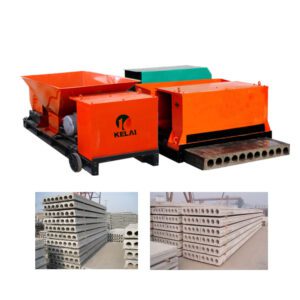
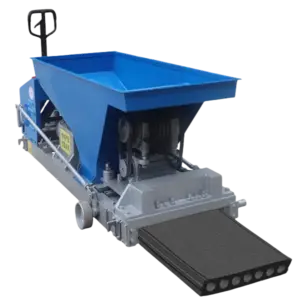
Una extrusora utiliza uno o varios sinfines giratorios para empujar hormigón rígido y sin asentamiento hacia delante y alrededor de los mandriles, formando los huecos a medida que la máquina avanza por sí misma a lo largo de la plataforma de colada. Las máquinas de Kelai son extrusoras específicas de tipo de empuje. Cada máquina está fabricada a medida y diseñada con precisión para un único espesor de losa, lo que constituye la principal diferencia con respecto a algunas configuraciones de encofrado deslizante europeas.
La gama de productos de Kelai abarca losas con un espesor de entre 120 y 320 mm. Sin embargo, Kelai no ofrece una configuración de una sola máquina con cambio de utillaje. En su lugar, cada espesor —120, 150, 200, 250 y 320 mm— se produce en su propia extrusora dedicada, fabricada a medida para esa sección transversal específica. Este enfoque basado en máquinas específicas garantiza una producción constante y de alta eficiencia para cada espesor, sin tiempos de inactividad asociados al cambio de utillaje, y ofrece una relación calidad-precio excepcional en comparación con las alternativas de utillaje múltiple.
Máquina de hormigonado por deslizamiento
Una máquina de encofrado deslizante compacta el hormigón mediante vibración mientras la máquina avanza, arrastrando un encofrado trasero que se desliza para dejar atrás la losa. Algunas marcas europeas utilizan máquinas de encofrado deslizante, que pueden adaptarse a distintos espesores mediante el cambio de los insertos de encofrado. Kelai no fabrica máquinas de encofrado deslizante; la tecnología de extrusora de empuje de Kelai ofrece una compactación del hormigón superior mediante el proceso de sinfín de moldeo en seco.
Por qué las extrusoras específicas son una buena opción desde el punto de vista operativo
Algunos compradores preguntan inicialmente por una única máquina que cubra todos los espesores. En la práctica, la mayoría de las plantas de prefabricados de gran volumen utilizan máquinas específicas para cada espesor por las siguientes razones:
- Sin tiempos de inactividad por cambio de producción: cada máquina funciona de forma continua con su propio producto
- Ajustes de calibración y compactación uniformes, optimizados para una sección transversal
- Los operarios adquieren una gran experiencia en un único tipo de máquina
- Se pueden poner en marcha varias máquinas simultáneamente, lo que permite maximizar la producción diaria
- Menor riesgo de irregularidades en la calidad debidas a cambios en las herramientas
Las extrusoras especializadas de Kelai están diseñadas específicamente para ofrecer eficiencia y durabilidad, y su precio es considerablemente inferior al de equipos europeos comparables, lo que hace que la configuración de cinco máquinas resulte muy competitiva en cuanto al coste total de propiedad.
2. Rango de espesores y opciones de la máquina
La línea de producción de losas alveolares de Kelai abarca los cinco espesores estructurales más habituales:
- 120 mm — Suelos residenciales ligeros y aplicaciones de luces cortas
- 150 mm — Suelos para uso residencial y comercial ligero
- 200 mm — Suelos comerciales y luces medias
- 250 mm — Suelos comerciales e industriales de gran luz
- 320 mm — Cargas industriales pesadas y grandes luces
Cada espesor se fabrica en una extrusora de empuje específica, fabricada a medida según la geometría exacta de la sección transversal, la configuración de los huecos y la capacidad de producción requeridas. Las máquinas para los distintos espesores comparten los mismos principios de funcionamiento y la misma lógica de control, lo que facilita a los operarios la gestión de las plantas con varias máquinas.
Pedidos por fases
Para los clientes que deseen comenzar con máquinas de 150, 200 y 250 mm (Fase 1) y añadir posteriormente máquinas de 120 y 320 mm (Fase 2), Kelai ofrece un plan de suministro por fases. El precio de las máquinas de la Fase 2 se confirma en el momento de realizar el pedido de la Fase 1, como protección frente al aumento del coste de las materias primas. Los clientes que encarguen las cinco máquinas a la vez se benefician de un descuento por pedido al por mayor.
3. Pretensado: selección de cordones en función del espesor
Las losas alveolares se pretensan utilizando cordones de 7 hilos de baja relajación, conformes a la norma ASTM A416 Grado 270 o EN 10138. Las líneas de producción de Kelai son compatibles tanto con cordones de 12,7 mm (½ pulgada) como de 15,2 mm (0,6 pulgadas) de diámetro. El diámetro adecuado del cordón y el número de cordones por ancho de losa dependen de la luz de diseño, la carga aplicada y el espesor de la losa.
Configuración recomendada de los hilos según el grosor
| Espesor de la losa | Diámetro recomendado del cordón | Número habitual de hilos (por cada 1,2 m de ancho) | Fuerza de pretensado inicial |
|---|---|---|---|
| 120 mm | 12,7 mm | 4–5 | ~70–751 TP3T de UTS |
| 150 mm | 12,7 mm | 4–6 | ~70–751 TP3T de UTS |
| 200 mm | 12,7 mm o 15,2 mm | 4–6 | ~70–751 TP3T de UTS |
| 250 mm | 15,2 mm | 4–6 | ~70–751 TP3T de UTS |
| 320 mm | 15,2 mm | 5–7 | ~70–751 TP3T de UTS |
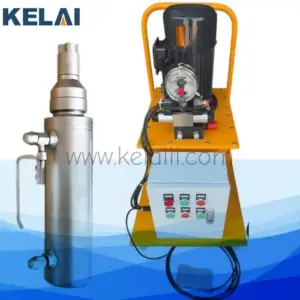
Los gatos hidráulicos de pretensado de Kelai están diseñados para ambos diámetros de cordón. El sistema de tensado incluye una célula de carga calibrada para verificar con precisión la pretensión y es compatible tanto con operaciones de pretensado de un solo cordón como de varios cordones.
4. Longitud de la mesa y disposición de las máquinas de la línea de producción de losas alveolares
Una duda habitual entre los compradores que cuentan con naves de producción de gran tamaño es si las máquinas están limitadas a bancadas de fundición de entre 60 y 80 m. Con Kelai, la respuesta es clara: Las extrusoras Kelai pueden funcionar en lechos de colada de cualquier longitud, incluidos los de 150 m, 180 m o más. La máquina en sí no presenta ninguna limitación física relacionada con la longitud de la bancada. Las limitaciones prácticas son las siguientes:
- Continuidad de los hilos: Las longitudes estándar de las bobinas de cables de pretensado permiten aplicar la tensión de forma ininterrumpida a lo largo de tramos de 150 m sin empalmes.
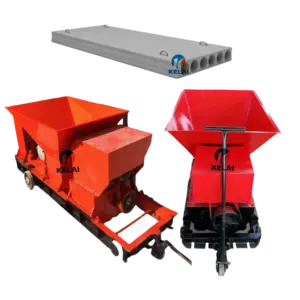
- Ámbito de distribución del hormigón: El camión cisterna y de distribución de hormigón de Kelai se configura según la longitud de la plataforma en el momento del pedido.
- Posición de corte de la sierra: La sierra de hoja de diamante móvil se desplaza a lo largo de toda la longitud de la bancada por el mismo sistema de raíles que la extrusora.
Ejemplo de plano de un edificio de 20 m × 200 m
Partiendo de un edificio de 20 m (anchura) × 200 m (longitud), una disposición práctica con lechos de colada de 150 m quedaría así:
| Zona | Longitud | Objetivo |
|---|---|---|
| Pilar de tensión (calo) | ~3 m | Bloque de anclaje fijo |
| Cama de fundición | 150 m | Elaboración y maduración |
| Pilar sometido a tensión (extremo libre) | ~3 m | Zona del gato hidráulico |
| Desmoldeo / apilado / envío | ~44 m | Desplazamiento y almacenamiento de grúas puente |
Con una anchura libre de 20 m, se pueden instalar cómodamente dos líneas de colada paralelas —cada una de aproximadamente 8 m de anchura, incluidas las pasarelas— una al lado de la otra, lo que permite la producción simultánea de dos espesores de losa. El equipo de ingeniería de Kelai proporciona, como parte de la propuesta técnica, un plano detallado en CAD adaptado a las dimensiones del edificio del cliente.
Por qué las camas más largas son importantes desde el punto de vista económico
Un lecho de 150 m en lugar de dos lechos de 75 m reduce los residuos de cordones en los estribos en aproximadamente un 50%, reduce a la mitad el número de configuraciones diarias y mejora la eficiencia de la grúa al permitir la manipulación de paquetes de losas más largos. Para una planta que produce entre 500 y 1.000 m² al día, esto se traduce en un ahorro significativo tanto en mano de obra como en materiales.
5. Alcance de la línea: qué se incluye (excluida la planta de hormigón)
Kelai suministra una línea de producción completa (línea de producción de losas alveolares). En caso de que el cliente ya disponga de una planta de hormigón, los siguientes elementos conforman el resto del alcance del proyecto y se presupuestan como partidas independientes:
- Máquinas extrusoras — Una o varias extrusoras específicas de tipo de empuje para cada espesor requerido
- Vehículo de reparto de hormigón — Vagón autopropulsado adaptado a la longitud de la plataforma
- Sierra móvil con hoja de diamante — Corte con ángulo variable (0–90°) sobre guía
- Equipos de pretensado — Gato hidráulico, unidad de bombeo, célula de carga, juegos de mordazas para cordones de 12,7 mm y 15,2 mm
- Viga de elevación y pinzas de vacío — Viga ajustable para los anchos estándar de losas; conjunto de ventosas
- Sistema de planta de hormigón — Podemos suministrar equipos complementarios, como hormigoneras de alta eficiencia, transportadores de tornillo y silos para áridos.
- Fundición de barandillas y estribos — Sistemas de carriles nivelados con precisión; planos de diseño de estribos de hormigón armado
- Asistencia técnica — instrucciones de instalación, puesta en marcha y formación de los operadores (in situ)
Cada artículo tiene un precio independiente, por lo que los clientes pueden adaptar el alcance del pedido a su inventario de equipos actual.
6. ¿Por qué? Henan Kelai Alternativas industriales frente a alternativas europeas
Marcas europeas como Elematic, Nordimpianti y Echo Precast fabrican maquinaria muy bien valorada. La cuestión clave para los compradores de la India, el Sudeste Asiático, Oriente Medio y África es si el sobreprecio europeo está justificado en el contexto específico de su proyecto y su mercado.
| Punto de comparación | Marcas europeas | Maquinaria Henan Kelai |
|---|---|---|
| Precio FOB de la máquina (línea completa de 5 espesores) | Alto (entre 1,5 y más de 3 millones de euros, por lo general) | Mucho más barato; ponte en contacto con nosotros para obtener un presupuesto exacto |
| Coste y plazo de entrega de las piezas de recambio | Elevado; normalmente entre 4 y 12 semanas desde Europa | Escaso; en stock en China; 1-3 semanas |
| Asistencia técnica en la India / Asia | Costoso; relacionado con los viajes | Atención ágil; ingenieros regionales a tu disposición |
| Plazo de entrega CIF Mundra | Entre 16 y 28 semanas, por lo general | Entre 12 y 18 semanas, por lo general |
| Flexibilidad en la longitud de la cama | Hasta 200 m+ | Hasta 200 m+ |
| Producción conforme a la norma EN 1168 | Sí | Sí |
| Configuración de la máquina | Máquina única o con múltiples herramientas | Extrusora específica para cada espesor |
| Instalaciones de referencia | Europa, América, Oriente Medio | China, India, Oriente Medio, África, Sudeste Asiático |
| Flexibilidad en las condiciones de pago | Limitado | T/T: 50% por adelantado + 50% antes del envío |
El modelo de extrusora especializada de Kelai es altamente eficiente precisamente porque cada máquina está optimizada para un único espesor: no hay concesiones en cuanto a la geometría del sinfín, la configuración del mandril o la fuerza de compactación, concesiones que son inevitables en los diseños de herramientas universales. El resultado es una calidad constante de las losas, menores costes de mantenimiento y un retorno de la inversión más rápido.
7. Condiciones comerciales y cómo solicitar un presupuesto
Kelai ofrece presupuestos formales tanto en condiciones FOB en un puerto chino como en condiciones CIF en Mundra. El paquete de presupuestos incluye:
- Presupuesto por partidas para cada componente del alcance
- Precio por máquina según el grosor (modelo con extrusora específica)
- Calendario de entrega por fases, si fuera necesario (Fase 1 + Fase 2)
- Descuento por pedido al por mayor para las cinco máquinas de distintos espesores que se adquieran juntas
- Condiciones de pago: 50% por adelantado mediante transferencia bancaria (T/T) + 50% mediante transferencia bancaria (T/T) antes del envío
- Plazo de entrega: entre 12 y 18 semanas desde el pago del anticipo hasta que el producto esté listo para su envío
- Perfil de la empresa, catálogo técnico, vídeos sobre el funcionamiento de las máquinas y lista de plantas de referencia
8. Preguntas frecuentes sobre la línea de producción de losas alveolares
¿Puede Kelai fabricar los cinco espesores con una sola máquina cambiando las herramientas?
N.º Kelai’s extrusoras de losas alveolares Son máquinas específicas de empuje, cada una de ellas fabricada con precisión para un único espesor de losa. Para producir cinco espesores se necesitan cinco máquinas distintas. Este enfoque específico ofrece una mayor eficiencia, una calidad de compactación constante y una mayor fiabilidad que las configuraciones con cambio de utillaje, a un coste total que sigue siendo muy competitivo frente a las alternativas europeas.
¿Qué mezcla de hormigón se necesita?
Las extrusoras Kelai utilizan una mezcla de hormigón de moldeo en seco sin asentamiento, normalmente con una relación agua/cemento de 0,30-0,35. El tamaño máximo de los áridos es de 10 a 14 mm. El contenido de cemento suele ser de 360 a 400 kg/m³ para alcanzar una resistencia a la compresión objetivo de C45 a C55. Kelai proporciona un diseño de mezcla recomendado en el momento de la puesta en marcha, adaptado a las condiciones locales de los áridos.
¿Es obligatorio el sistema de curado, o se puede recurrir al curado natural?
El curado natural es viable en climas cálidos (temperatura ambiente superior a 20 °C), pero alarga el ciclo de liberación de las hebras de aproximadamente 16 horas (con curado al vapor a 60-70 °C) a 24-48 horas. Para las plantas que buscan un alto rendimiento diario, se recomienda el curado al vapor o el curado con cubierta térmica. Kelai ofrece ambas opciones.
¿Qué servicio posventa ofrece Kelai para una planta en la India?
La oferta de servicios de Kelai para los clientes indios incluye la puesta en marcha in situ y la formación de los operadores (normalmente dos semanas), una garantía de 12 meses para los componentes estructurales, asistencia técnica a distancia mediante videollamada y un compromiso de suministro de piezas de recambio, con entrega de las piezas estándar en un plazo de 2 a 3 semanas en un puerto indio. Existe un programa de visitas de servicio para el primer año de funcionamiento, disponible con un coste adicional.
¿Cumple la línea de producción con las normas IS, además de con la norma EN 1168?
Las losas alveolares fabricadas en las líneas de producción de Kelai pueden diseñarse y someterse a ensayos para cumplir con la norma IS 1343 (Código de prácticas para el hormigón pretensado) y la norma IS 6452 (Trenzas de alambre de acero de baja aleación y alta resistencia para hormigón pretensado). El diseño de la losa —y no solo la máquina— debe ajustarse a la norma aplicable. Kelai proporciona documentación de referencia para el diseño con el fin de ayudar al ingeniero estructural del cliente.
¿Cuál es la producción habitual por lecho de fundición al día?
En una línea de colada de 150 m que produce losas de 200 mm con un ancho de 1,2 m, un turno bien gestionado puede colar toda la línea en aproximadamente 2-3 horas. Tras el curado natural (16 horas), el desmoldeo y el corte con sierra llevan otras 2-3 horas. La producción habitual es de 150 a 180 m² por lecho al día en un ciclo de un solo turno más el curado nocturno, aunque se puede alcanzar una producción mayor mediante un funcionamiento en dos turnos.
Máquina para fabricar losas alveolares prefabricadas de hormigón para forjados y cubiertas