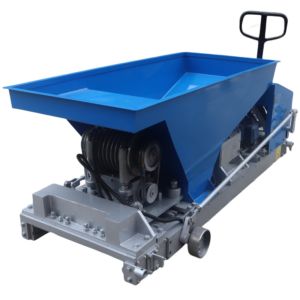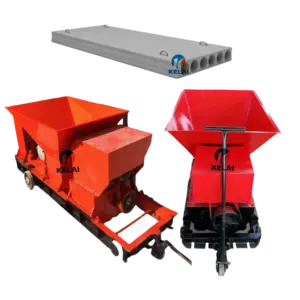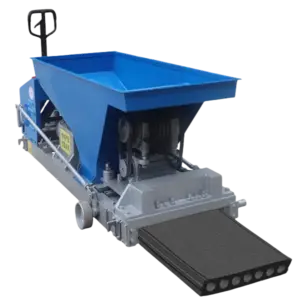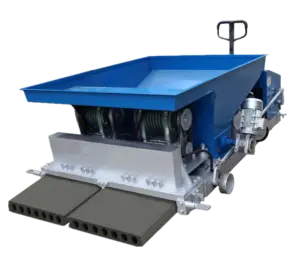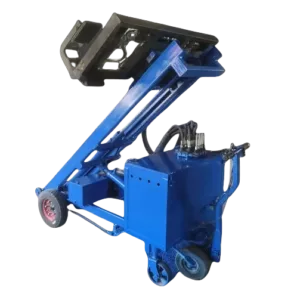
Precast Concrete Wall Panel Machines: The Driving Force Behind Smart Construction
1. Market Demand: Why Precast Concrete Wall Panel Machines Matter
In today’s fast-evolving construction industry, precast concrete wall panel machines have become indispensable. With the global push for more sustainable, efficient, and cost-effective building solutions, these machines are now widely adopted across both residential and commercial projects.
🏡 Residential Use
In housing construction, wall panel machines produce exterior and interior precast panels with high dimensional precision and consistent quality. Thanks to standardized production, these panels offer:
- ✅ Excellent thermal insulation
- ✅ Effective soundproofing
- ✅ Fire resistance
- ✅ Moisture and corrosion resistance
Such features help create safe, comfortable, and energy-efficient living environments.
🏭 Commercial & Industrial Use
In commercial buildings and factories, high-strength precast panels meet the load-bearing requirements of large structures. Moreover, rapid installation reduces:
- ⏱️ Construction time
- 👷 On-site labor
- 💰 Total project cost
🌐 Brand Insight: Kelai Industrial Co., Ltd.
Brands like Henan Kelai Industrial Co., Ltd. are leading the market with fully integrated, automated production lines. Their system covers:
- Raw material processing
- Mixing and vibration
- Panel molding and curing
- Cutting and stacking
The result: fast, clean, and scalable wall panel production for global precast manufacturers.
2. How It Works: Inside the Precast Wall Panel Machine
A precast concrete wall panel machine automates the production of wall panels through a series of precision-controlled steps. Here’s a breakdown of the process:
🔄 Step-by-Step Workflow
1. Concrete Preparation
Cement, sand, gravel, and admixtures are mixed into a consistent concrete slurry via a batching mixer.
2. Mold Filling
- Horizontal system: Concrete is poured evenly into flat molds with vibration for compaction.
- Vertical system: Concrete is injected into upright molds and compacted via vibration, extrusion, or vacuum.
3. Forming Process
- Extrusion type: Pressure forms panels through a nozzle head.
- Vibration type: High-frequency vibration removes air and densifies the mix.
- Roller type: Rollers apply pressure for fast and even compaction.
- Vacuum-assisted type: Used in advanced systems to enhance density.
4. Steel Reinforcement & Insulation (Optional)
Some machines embed rebar or steel mesh automatically to enhance strength. Others allow placement of insulation materials like EPS to create composite panels.
5. Curing & Demolding
Panels are transferred to curing chambers to gain strength. After setting, they are demolded—either automatically or manually.
6. Cutting & Surface Treatment
Panels are trimmed to length and optionally coated or sprayed for waterproofing or finish aesthetics.
7. Stacking & Transport
Finished panels are stacked for storage or ready for delivery to the construction site.
💡 Key Advantages
- Full automation reduces human error
- Reproducible quality and accurate sizing
- Integration with steel and insulation systems
- High-speed, large-scale output
3. Market Expansion: A Global Opportunity
The future of precast wall panel machines looks bright across both domestic and international markets.
🇨🇳 Domestic Growth
China’s urbanization and government-backed prefabricated building initiatives are driving strong demand for precast panels, particularly in:
- Public housing
- Schools and hospitals
- Government infrastructure
🌍 International Expansion
Under the Belt and Road Initiative, Chinese-made precast equipment, including Kelai’s machinery, is gaining attention overseas. With competitive pricing and stable performance, these machines are being exported to:
- Southeast Asia
- Africa
- The Middle East
- Eastern Europe
Meanwhile, global interest in green buildings and energy efficiency is rising. Precast concrete panels—known for their sustainability and thermal performance—are becoming the material of choice in modern eco-conscious construction.
4. Empowering Industrialized Construction
Precast concrete wall panel machines do more than just produce wall elements—they drive the industrialization of modern construction.
🏗️ Construction Benefits
- 🔄 Standardized production
- 🚀 Rapid on-site assembly
- 📉 Lower labor and time cost
- 🧱 Better building consistency and safety
🛠️ Industry Chain Integration
The growth of this equipment stimulates demand across related sectors:
- Cement and aggregate suppliers
- Steel reinforcement manufacturers
- Logistics and warehousing
- Equipment parts and maintenance services
This creates a full-scale industrial chain, supporting high-efficiency construction and sustainable urban development.
✅ Conclusion: Invest in the Future of Construction
Precast concrete wall panel machines are not just a tool—they are the foundation of tomorrow’s construction systems. Whether you’re a contractor, builder, or factory operator, investing in smart, automated, and efficient panel machinery is a strategic step toward the future of building.
👉 Learn more about advanced panel production lines from Henan Kelai Industrial Co., Ltd.
Visit: www.kelaiii.com | www.cnkelaiii.com
📲 WhatsApp: +86 17788171295