Concrete Wall Making Machine: Structure, Working Principle, and Benefits for Modern Construction
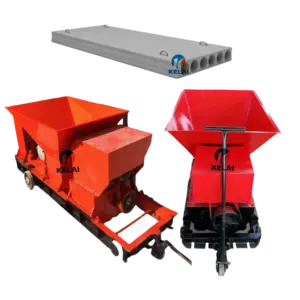
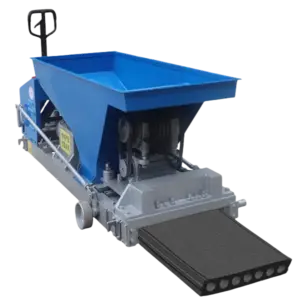
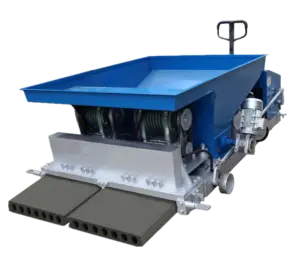
A concrete wall making machine is a specialized piece of equipment used to manufacture precast concrete wall panels for modern construction. These machines are widely adopted for their high efficiency, precision, and compatibility with industrial-scale production. From raw material preparation to panel curing and packaging, each system component plays a vital role in ensuring consistent quality and output.
🛠️ Structural Components of a Concrete Wall Making Machine
1. Raw Material Processing System
This system is responsible for weighing, crushing, screening, and mixing raw materials such as cement, sand, ceramsite, and aggregates. Precision metering devices ensure accurate batching based on the desired concrete formulation, which is critical for the strength and consistency of finished panels.
2. Mixing System
Processed raw materials are transferred to a high-efficiency mixer. Water and optional additives such as foaming agents or chemical admixtures are added to form a uniform concrete slurry. The performance of the mixer directly influences the panel’s compactness and structural integrity.
3. Molding System
The prepared slurry is poured into molds, where it is shaped under vibration or pressure. Advanced vibration systems ensure even compaction and eliminate air voids, producing panels with precise dimensions and smooth surfaces.
4. Curing System
Panels undergo steam curing or natural curing to accelerate cement hydration and improve final strength. Conditions such as temperature, humidity, and duration are strictly controlled to meet technical specifications.
5. Cutting and Packaging System
After curing, panels are cut to the desired size and shape using automated cutting machines. Final products are then packaged and prepared for transport or storage, ensuring damage-free delivery to construction sites.
⚙️ Working Principle of Concrete Wall Making Machines
While specific machines may vary in function, the core working principle remains consistent:
- Raw materials are proportioned and mixed into concrete slurry
- The slurry is poured into molds (vertical or horizontal)
- Rebar or insulation may be inserted depending on design
- The mixture is compacted using vibration, extrusion, or rolling
- Curing accelerates strength development
- Panels are demolded, cut, and finished
💡 In lightweight wall panel machines, foaming techniques may be used to introduce air bubbles, reducing density and enhancing thermal insulation.
🔍 Classification of Wall Panel Machines
🧱 By Material Type
- Ordinary Concrete Wall Machines
Produce high-strength panels suitable for structural walls and basements. - Lightweight Concrete Wall Machines
Use ceramsite or EPS particles for reduced weight and improved insulation. Ideal for non-load-bearing and exterior walls. - Fiber-Reinforced Wall Machines
Add fibers like glass or carbon to enhance crack resistance and toughness, used in demanding environments.
🧰 By Forming Process
- Vertical Mold Wall Panel Machines
Concrete is poured from the top into vertical molds and compacted via gravity and vibration. This setup provides high dimensional accuracy and is suited for large-scale production. - Horizontal (Flat Die) Wall Panel Machines
Molds are laid flat and filled horizontally. Simple to operate and maintain, these machines are suitable for small factories or special-shaped panels.
✅ Advantages of Concrete Wall Making Machines
- High Efficiency
Automated systems allow daily production of hundreds to thousands of square meters of panels, meeting large project demands. - Consistent Quality
Precise control of mixing ratios and forming processes ensures stable, repeatable results. - Labor Saving
Automation reduces manpower requirements and operational costs. - Energy Saving & Eco-Friendly
Compared to traditional brick construction, concrete panel machines minimize material waste and can integrate energy-saving features. - Fast and Clean Construction
Precast panels are installed directly on-site, reducing wet work, speeding up project timelines, and improving jobsite cleanliness.
🏗️ Application Scenarios
🏠 Residential Buildings
Used in interior and exterior partition walls with excellent insulation, soundproofing, and fire resistance.
🏢 Commercial Buildings
Deployed in malls, offices, and hotels for decorative panels, partitions, and firewalls.
🏭 Industrial Facilities
Serve as durable, corrosion-resistant enclosures for factories, warehouses, and workshops.
🏫 Public Infrastructure
Ideal for schools, hospitals, and stadiums—delivering fast construction and reliable performance in high-traffic areas.
📌 Conclusion
Concrete wall making machines are transforming the construction landscape by delivering fast, efficient, and cost-effective solutions for modern buildings. With their ability to produce customized, high-performance wall panels, these machines are indispensable for any enterprise involved in precast concrete manufacturing.
Interested in reliable, automated wall panel production solutions?
👉 Explore our full range at www.kelaiii.com | WhatsApp: +86 17788171295
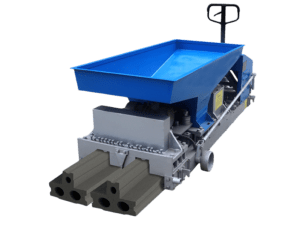
Precast T Shape Wall Extruder Machinehttps://www.kelaiii.com/precast-concrete-wall-panel-extruder/