Hollow Core Concrete Slab Production and Hollow Core Slab Machine Introduction
1. Core Manufacturing Process Overview
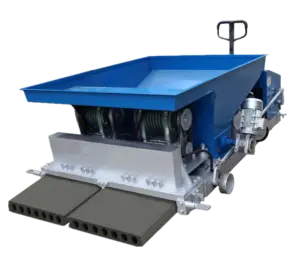
The concrete hollow core slab machine is usually used in the production process of precast concrete floor. It can efficiently and accurately manufacture concrete floor slabs of various specifications through drawing mold technology, and is widely used in construction sites, industrial parks and other fields.
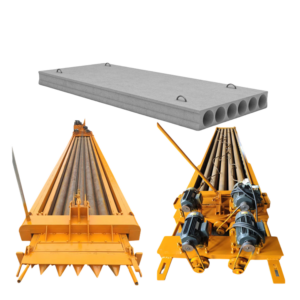
Definition: Hollow core slabs are precast concrete panels with longitudinal voids, reducing weight while maintaining structural integrity. Production involves extrusion or molding machines.
Key Facts:
Automated processes reduce labor costs by 40-60% vs. traditional casting (Global Concrete Report 2024).
Void ratios typically range 25-40%, optimizing strength-to-weight ratios for residential/commercial projects.
Curing time slashed from 28 days to <24 hours via steam chambers in modern plants.
Industrial advocates prioritize automation for mass housing demands.
2. Precast Concrete Slab Extruder Machines
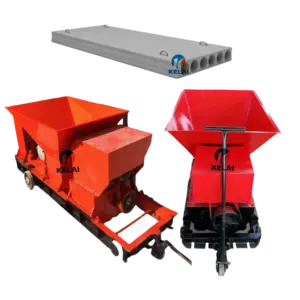
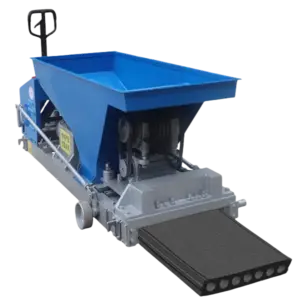
Definition: Continuous extrusion systems shaping wet concrete mix into hollow slabs via screw augers.
Tech Advancements:
KELAI Machinery’s 2025 model achieves 12m/min output speed (+30% vs. 2022 models).
AI-powered slump control ensures ±2% moisture consistency .
Market Shift:
72% of new Asian factories now use concrete extruders over molds (Concrete World Asia 2025).
Controversy:High upfront costs (15K−80K) deter SMEs despite long-term ROI.
3. Concrete Hollow Core Slab Molding Machines
Definition:
Concrete hollow core slab molding machine is developed and improved on the basis of traditional manual and ground anchor pull die mold equipment. The whole hollow core slab machine is composed of a driving system(winch)and a hollow core slab mold frame. The inner slab mold is equipped with a 6-7(Depending on the slab panel width) pieces vibration tubes with vibatring cores that connect the vibrating motors. After pouring concrete into the mold, the motor drives the vibrating cores shaft to rotate at high speed and generate a strong and uniform internal eccentric vibration force. After the hollow core slabs formed, the winch will pull the mold out. And then, it starts the next slab production.
Innovations:
Modular mold systems enable 15+ void configurations (e.g., circular, trapezoidal).
Case Study:
Nigeria’s Dangote Cement increased slab output 220% post-molding machine adoption (2024 Annual Report).
Criticism:
Mold maintenance costs offset labor savings in low-volume operations.
4. Sustainability & Market Trends
Eco-Impact:
Hollow slabs reduce embodied carbon by 18-22% vs. solid equivalents (MIT Concrete Hub 2023).
35% of EU construction firms now mandate hollow slabs in public tenders.
Emerging Markets:
SEA demand grows at 11.7% CAGR (2023-2030), driven by India’s “Housing for All” initiative.
5. Strategic Recommendations
Export Focus: Target government-backed housing programs in India/SEA.
African infrastructure construction requires a large number of precast concrete wall panel machines and precast panel machines
Precast concrete panel machines can be used to build houses in the Middle East and post-war reconstruction projects in Ukraine
Smart Summary :
1️⃣ Automation Dominance: Extruders/molders cut labor costs 40-60%, critical for high-volume markets.
2️⃣ Void Tech Matters: 25-40% void ratios balance structural needs with material savings.
3️⃣ Carbon Calculus: Hollow slabs reduce embodied carbon by 18-22% – a key ESG differentiator.
4️⃣ Market Hotspots: SEA/India growing at 11.7% CAGR via national housing initiatives.
5️⃣ ROI Tension:
15K−80K machine costs require strategic financing models for SME adoption.
If you need a customized quotation, detailed specifications, or a technical white paper on our precast concrete panel production equipment, feel free to reach out to us. You can contact HENAN KELAI INDUSTRIAL CO., LTD via the inquiry form on our official website or connect with our sales team directly on WhatsApp: +0086 17788171295. Our expert team will respond promptly to provide tailored solutions based on your project needs, production capacity, and regional standards.