Top 4 Precast Concrete Fence Installation Methods: Ultimate Guide 2026
Precast concrete fences and boundary walls have become the mainstream prefabricated building materials for industrial plants, park security, municipal projects, residential yards, and construction site enclosures due to their short construction cycles, structural stability, wind resistance, corrosion prevention, and reusability. Unlike traditional brick walls, high-quality precast walls are mass-produced using specialized precast concrete wall panel machines. Their dimensional precision, structural strength, and surface flatness far exceed site-cast alternatives, enabling rapid deployment when paired with standardized installation techniques.
Many construction projects suffer from low efficiency, large panel joints, and structural instability. The root cause often lies not only in non-standardized installation techniques, but also in the insufficient dimensional precision of the components caused by substandard precast wall production equipment. To achieve seamless precast concrete fence installation, engineering teams must combine standardized Precast Boundary Wall Installation Method guidelines with high-performance precast manufacturing machinery. This article provides a comprehensive reference covering four mainstream installation methods, the complete construction process, foundation and joint details, as well as equipment selection insights tailored for overseas engineering contractors, construction teams, and precast component plants.
1. Top 4 Precast Concrete Fence Installation Methods
Within the Precast Compound Wall Installation Process framework, the selection of equipment directly determines construction efficiency and engineering quality. The overall success of precast concrete fence installation depends on both site techniques and the component precision delivered by upfront Precast Concrete Wall Panel Machines. Overseas contractors utilize four primary installation methods based on site conditions, project scale, and wall specifications.
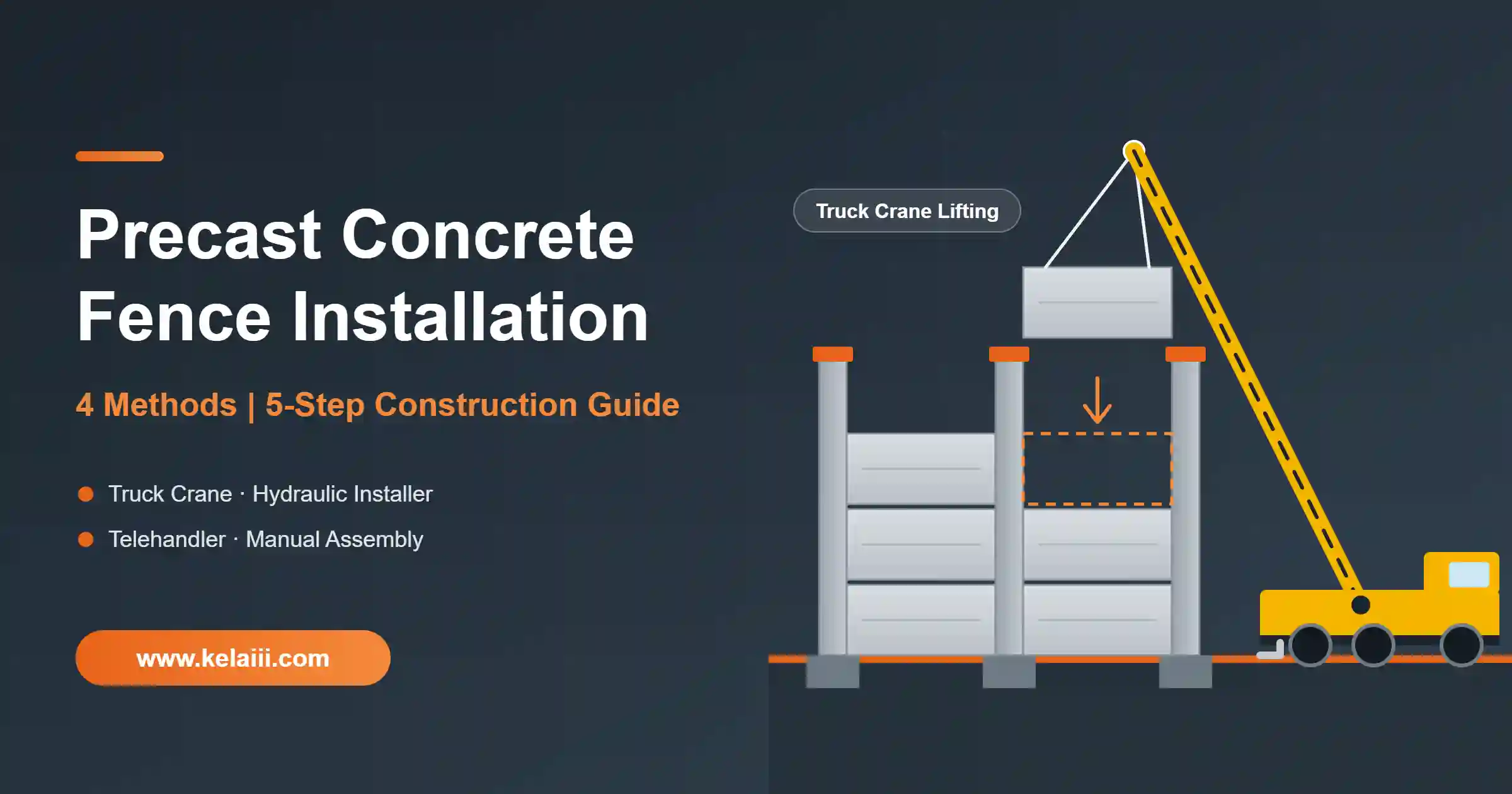
(1) Heavy Crane Installation Method (Standard for Large Security Projects)
This method is widely applied in large-scale projects such as walls exceeding 3 meters in height, long-distance industrial park security perimeters, and municipal boundary walls. During this type of precast concrete fence installation, truck cranes equipped with dedicated lifting rigging precisely position precast columns and wall panels, relying heavily on mechanized operations with minimal manual assistance.
-
Requirements & Advantages: This technique demands extremely high dimensional accuracy from the wall panels, making it compatible only with standardized components mass-produced by automatic precast boundary wall production lines and Hollow Core Slab Extruders. High-precision components feature uniform thicknesses and regular slots, boosting construction efficiency by over 60% compared to traditional processes during Security Boundary Wall Construction.
(2) Hydraulic Wall Panel Installer Method (High Efficiency for Confined Spaces)
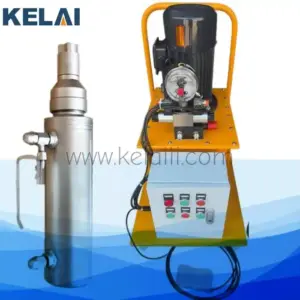
For park retrofits, urban enclosures, and courtyard fencing projects where working space is narrow, the hydraulic installer is the optimal solution for precast concrete fence installation. Featuring built-in hydraulic lifting and micro-adjustment positioning functions, the equipment can independently complete panel lifting, insertion, and alignment.
-
Requirements & Advantages: This equipment accommodates various standardized precast concrete wall panels, especially lightweight modular panels produced by Precast Concrete Slab Making Machines. Uniform component dimensions seamlessly match hydraulic installers, eliminating jamming and serving as a reliable choice for Precast Wall Panel Installation Steps.
(3) Telehandler-Assisted Installation Method (General Economic Solution)
Telehandlers are common versatile machines used in civil fencing and commercial site boundary construction. Equipped with specialized wall panel clamps, operators can quickly execute column fixing and wall panel assembly during precast concrete fence installation.
-
Requirements & Advantages: This method relies heavily on component versatility. Standardized panels and columns mass-produced by precast fence post forming machines offer strong compatibility. Without secondary grinding or modification, they directly fit telehandler-assisted workflows, saving substantial site time for local Concrete Fence Contractors.
(4) Manual Assembly Method (Dedicated to Small DIY / Temporary Enclosures)
For low temporary fences, small yard boundary walls, and simple isolation barriers, pure manual assembly can be adopted.
-
Requirements & Advantages: Panels processed by lightweight precast wall panel machinery feature moderate self-weight, smooth slots, and precise dimensions. 2 to 3 construction workers can easily perform manual precast concrete fence installation top-down without heavy machinery, making it ideal for small DIY construction and temporary projects.
2. Step-by-Step Precast Concrete Fence Installation Process
A standardized precast concrete fence installation workflow consists of five major stages: site survey and foundation construction, column installation, panel assembly, structural joint reinforcement, and sealing/curing.
Step 1: Site Survey and Foundation Construction (Precast Concrete Wall Foundation)
The initial stage of precast concrete fence installation requires site leveling, axis positioning, and elevation re-measurement. Excavate foundation pits for columns according to the designed wall spacing, and determine pit depth based on geological conditions. Soft subgrades must be reinforced with crushed stone layers to prevent settlement.
-
Pro Tip: Premium foundations paired with standardized Precast Concrete Wall Footing techniques match various precast component dimensions. Column bases produced by automated precast wall lines fit seamlessly with on-site foundation points to eliminate misalignments.
Step 2: Precast Column Positioning and Fixing (Precast Fence Posts Installation)
Place standardized precast fence columns into the foundation pits via crane or manual labor, and use spirit levels to calibrate verticality and column spacing. Once adjusted, cast concrete to backfill and fix the columns, allowing them to cure until target strength is reached.
-
Pro Tip: Column slot precision is critical for smooth precast concrete fence installation. Columns mass-produced by Precast Fence Post Forming Machines feature consistent slot depths and smooth inner walls, reducing subsequent panel assembly difficulty.
Step 3: Precise Precast Wall Panel Assembly (Core Stage)
Match the installation equipment to the site scenario. Smoothly lift precast wall panels and insert them from top to bottom into the dedicated column slots, stacking them layer by layer. Real-time alignment ensures uniform gaps and a straight wall profile.
-
Pro Tip: Assembly smoothness relies on component precision. Hollow core slab extruders and precast wall panel forming equipment utilize high-frequency vibration and extrusion molding processes, yielding minimal dimensional errors and eliminating the need for on-site grinding.
Step 4: Structural Joint Connection and Reinforcement (Precast Wall Connection Details)
Once wall assembly is complete, reinforce and seal all Precast Wall Connection Details, focusing on sealing the joints between panels and columns, as well as between individual panels. High-security projects can incorporate metal connectors to enhance wind and seismic resistance.
-
Pro Tip: Standardized components are prerequisites for secure joint sealing, preventing long-term hazards like rainwater seepage, wall weathering, and structural loosening.
Step 5: Sealing, Finishing, and Curing
After the wall is installed, clean surface debris, apply elastic joint sealant, and install precast fence copings to optimize protection and aesthetics. Avoid external impacts during the curing period to ensure structural stability.
3. The Role of Machinery in Precast Concrete Fence Installation
Many construction sites experience installation lags, oversized gaps, and wall tilting. 90% of these root causes stem from backward precast component production equipment. Achieving efficient precast concrete fence installation requires specialized sets of precast concrete machinery:
-
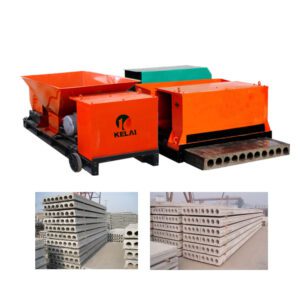
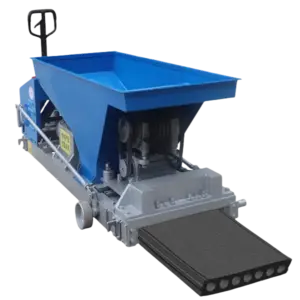
Precast Wall Panel Extrusion Machinery: Includes Hollow Core Slab Extruders and Precast Concrete Wall Panel Extrusion Machines. Utilizing fully automatic extrusion and vibration molding technologies, they batch-produce hollow and solid precast wall panels featuring high density and precise dimensions.
-
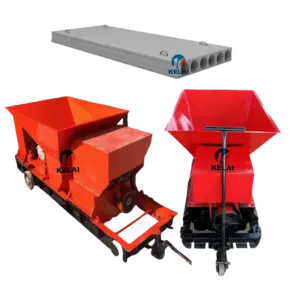
Precast Fence Post Forming Machine: Specialized equipment for producing Precast Fence Posts and Panels. High molding precision ensures uniform column slots and standard specifications, achieving seamless matching between wall panels and columns.
-
Fully Automatic Precast Boundary Wall Production Line: An integrated complete set of equipment combining feeding, vibration, molding, demolding, and curing. It can continuously mass-produce standardized fence components 24/7 to fulfill large-scale project supply demands.
4. Commercial Guide for Engineering Services and Equipment Procurement
Successful precast concrete fence installation relies on a dual guarantee of component mass production and standardized construction. Professional Precast Fence Manufacturers and Installers are equipped with full sets of high-precision precast concrete production machinery, providing one-stop services covering component customization, equipment sales, engineering construction plans, and installation technical guidance.
Whether upgrading precast component plant equipment, procuring machinery for new projects, or seeking construction technical consulting, premium Concrete Fence Contractors and equipment suppliers can customize exclusive production line configurations and Precast Wall Erection Method Statements tailored to your project scale.
Summary
Achieving efficient precast concrete fence installation relies on the core formula of high-precision precast components and matching installation techniques. From simple manual assembly and hydraulic equipment operation to heavy crane lifting, four mainstream installation processes cover all scenario requirements. Equipping operations with hollow core slab extruders, fully automatic wall panel production lines, and post forming machines allows manufacturing-end control over component precision, thoroughly resolving on-site installation pain points and raising project quality.